 Reviews



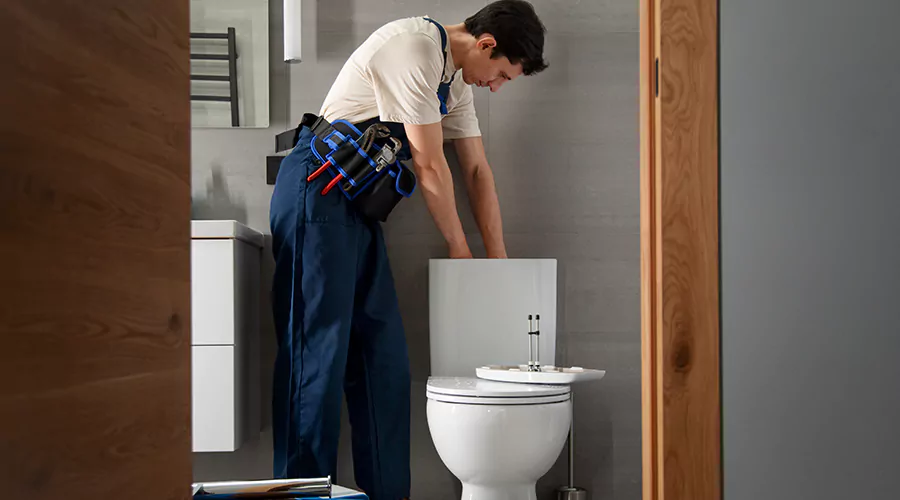
No water in a toilet tank usually means the tank is not receiving water through the supply line or fill valve, and a slow-filling toilet repair costs about $60 to $200 in 2026. Start with the shutoff valve because it can stop tank refill completely when closed. Kitchen sink installation can also be handled as part of a plumbing upgrade when replacing or adding a kitchen sink and its connected water lines.
If there is no water in toilet tank after a flush, the problem is different from a clogged toilet. The bowl drain can be completely open while the tank remains empty.
The troubleshooting path should follow the water supply from the wall to the tank.
What Usually Causes an Empty Toilet Tank?
An empty tank means water either cannot enter or cannot remain inside. A closed shutoff valve can stop the supply. A kinked supply line can restrict flow. A fill valve can remain closed because of debris or a stuck float.
- A leaking flush seal creates another pattern.
- Water may enter normally but escape into the bowl.
- That can make the tank appear unable to stay full.
Korky recommends checking the supply shutoff and supply line first when a tank does not refill.
Home Depot also identifies the fill valve and internal flush components as common sources of tank problems.
How Does a Tank-Filling Problem Progress?
A fill problem can begin as a slower refill before the tank stops filling completely. Sediment may gradually reduce flow through the valve. A float can also begin sticking intermittently before it stops opening the valve after every flush.
| Stage | What You Notice | Likely Issue | 2026 Cost Exposure |
|---|---|---|---|
| Early | Tank fills slowly | Restricted flow | Often DIY |
| Moderate | Tank stops before full | Float or valve problem | $60 to $200 |
| Severe | Tank receives almost no water | Supply or valve failure | $50 to $150 valve work |
| Persistent | Tank empties between flushes | Internal leak | Depends on failed part |
Angi lists slow-filling toilet repair at about $60 to $200 in 2026. Valve replacement generally falls around $50 to $150.
An early slowdown gives you more diagnostic information than a completely dry tank.
What Should You Check First?
Start at the shutoff valve behind or beside the toilet. It should be open enough to provide normal flow. Then inspect the flexible water line between that valve and the bottom of the tank for bends or visible damage.
- Turn the valve toward the open position.
- Do not force an old valve that feels seized.
- Check the supply line for a sharp kink.
- Listen for water entering the tank.
- If flow resumes, allow the tank to fill fully.
Korky recommends checking these two points before replacing internal toilet parts.
If the supply appears normal but no water enters the tank, move to the fill valve.
Can a Fill Valve Cause an Empty Tank?
Yes. The fill valve opens after a flush and closes when the tank reaches its set water level. A stuck float can keep the valve closed. Mineral deposits inside the valve can also reduce flow until the tank fills very slowly or not at all.
- Remove the tank lid.
- Locate the vertical fill valve.
- Check whether the float moves freely.
- Gently move the float through its normal range.
- Listen for water when it drops.
- Do not bend components aggressively.
Korky reports that sediment or mineral buildup inside the fill valve can restrict tank refill.
Fluidmaster troubleshooting also identifies debris inside the valve or supply line as a cause when the valve will not refill the tank.
Could Water Be Leaving the Tank Instead?
A tank can receive water normally yet remain unusually low if water escapes through the flush opening. A flapper that does not seal can let tank water move continuously into the bowl. The fill valve may then cycle or struggle to maintain its set level.
- Inspect the inside of toilet tank after the tank begins filling.
- Look at the flapper near the bottom.
- The flapper should sit flat on its sealing surface.
- Check whether the lift chain is caught underneath.
- A tangled chain can hold the flapper open.
Home Depot identifies a stuck flapper or flush valve as a common cause of continuous tank-to-bowl water movement.
A leaking flapper usually produces water movement in the bowl even when the toilet is not being used.
Can a Broken Chain Cause an Empty Tank?
A toilet chain broke condition normally prevents the handle from lifting the flapper. However, a chain that becomes tangled can hold the flapper open. Water can then leave the tank almost as quickly as the fill valve supplies it.
- Remove the tank lid.
- Check the handle connection.
- Follow the chain to the flapper.
- Make sure the chain is not trapped under the seal.
- Leave enough slack for the flapper to close completely.
Home Depot notes that tangled chains can keep the flapper open and cause water to keep passing into the bowl.
A detached chain and a trapped chain create different symptoms.
How Can You Test the Water Supply?
You can test a flexible supply line when the shutoff valve is operating normally but the tank still receives little water. Turn the supply off first. Disconnect the line at the fill valve and direct it into a bucket before briefly reopening the valve.
- Use caution around old fittings.
- Do not force corroded connections.
- Strong bucket flow points toward the fill valve.
- Little flow points toward the supply side.
Korky recommends this test when a tank fills slowly or does not refill.
Reconnect the line carefully after the test.
Check the connection for leaks before leaving the toilet unattended.
When Should You Call a Professional?
Professional help is reasonable when the supply valve is seized or the supply line has little water even though other fixtures work normally. It also makes sense when replacing or cleaning the fill valve does not restore tank refill.
Current 2026 pricing puts slow-filling toilet repair at about $60 to $200. Valve replacement costs about $50 to $150. General toilet repairs average roughly $271.
Seek professional diagnosis when:
- The shutoff valve leaks.
- The valve will not turn.
- The supply line has no flow.
- New fill-valve parts do not solve the problem.
- Water leaks outside the tank.
- The toilet tank itself is cracked.
Water outside the fixture changes the problem from performance to property protection.
How Can You Prevent Tank Refill Problems?
Inspect the toilet whenever refill time begins changing. A slowly developing restriction is easier to identify while some water still reaches the tank. Sediment inside the valve can become more troublesome as the opening gets smaller.
- Keep the shutoff valve accessible.
- Do not store objects against the supply line.
- Listen for longer refill cycles.
- Check the float if filling becomes inconsistent.
- Inspect the flapper when the toilet begins cycling by itself.
Korky notes that older fill valves can develop internal restrictions. Its guidance suggests replacement when a valve is no longer serviceable or has significant age-related wear.
Conclusion
If there is no water in toilet tank, trace the supply in order. Check the shutoff valve first and inspect the supply line next. Then test the fill valve and float. Look for a flapper that lets water escape as fast as the tank fills. If the supply itself has failed, professional diagnosis may be appropriate. This week, note how long your toilet normally takes to refill after one flush.
Frequently Asked Questions
Why is my toilet tank empty but the bowl has water?
The bowl keeps a separate water seal. An empty tank usually points to a refill or tank-leak problem rather than loss of bowl water.
Why does my toilet tank fill only when I touch the float?
The float or fill valve may be sticking. Cleaning or replacement may be needed if normal movement does not return.
Can low house water pressure stop a toilet tank from filling?
Very low supply pressure can reduce refill flow. Compare the toilet with other nearby fixtures before assuming the tank parts have failed.
Why does the tank fill very slowly?
A partly closed shutoff valve or restricted fill valve can reduce flow. Sediment inside the valve is another common cause.
Can I flush a toilet with an empty tank?
You can sometimes create a manual flush by adding enough water directly to the bowl. That does not repair the empty tank problem.